
After water intrusion that touched drywall or insulation
If porous materials were wet and you are not sure they fully dried, testing plus moisture mapping helps confirm whether hidden areas are still damp and likely to support growth.
Serving Santa Clarita, California & surrounding areas
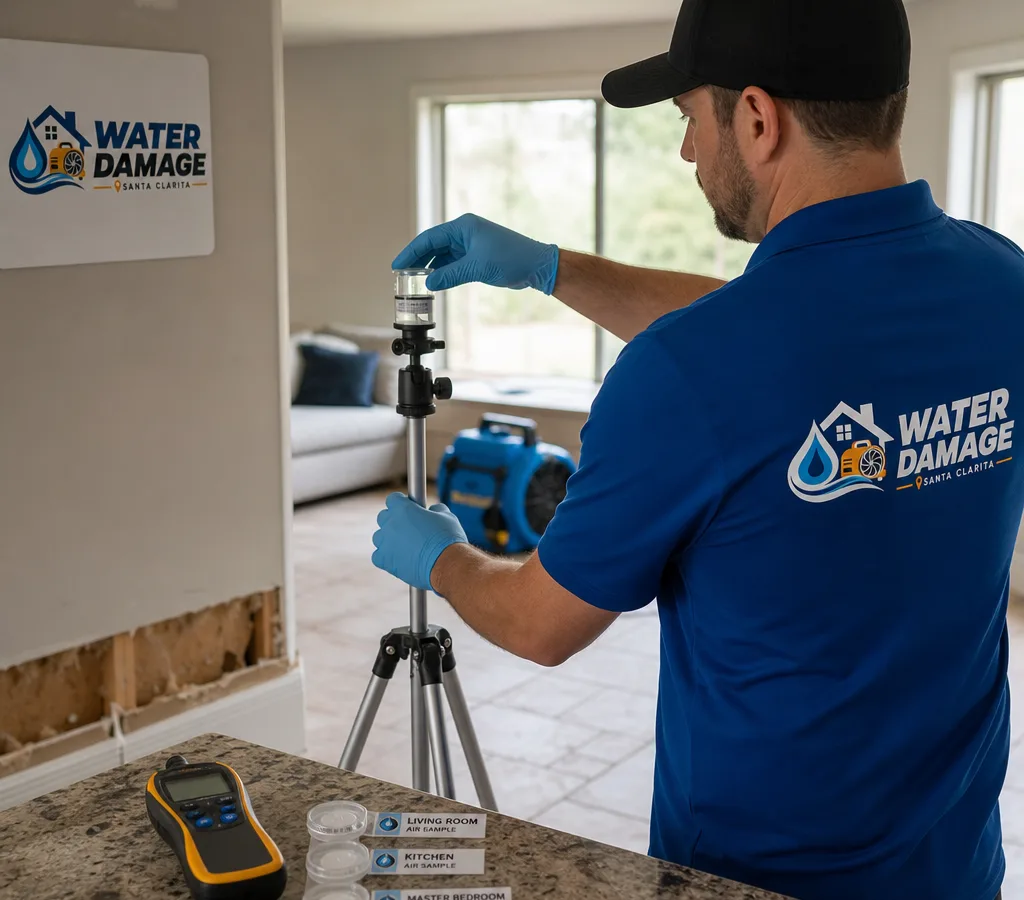
Mold Testing · Santa Clarita
If you smell musty odors after a leak or see suspicious staining, a targeted inspection and lab-backed sampling can confirm what is in the air and on surfaces so you can make the right next decision.
✓Skip the 3-hour Google rabbit hole — we’ve already done the vetting
✓One conversation, not ten voicemails and seven web forms
✓24/7 emergency response — talk to a real person who actually knows Santa Clarita
A real person answers - 24/7 Emergency Response
Immediate response scope
Searching for mold testing Santa Clarita usually means something happened—a roof leak, plumbing issue, wet drywall, damp closet, or HVAC condensation—and you want clear answers before the problem spreads.
At Water Damage Santa Clarita, mold testing focuses on three outcomes:
Mold often appears in cool, enclosed places such as bathrooms, laundry areas, under sinks, around windows, behind baseboards, and in closets on exterior walls. Heavy HVAC use can also leave damp materials around a clogged drain line or humid equipment closet.
Testing helps distinguish a genuine contamination concern from normal dust, old staining, or harmless discoloration. It also provides useful documentation when water damage restoration and drying need to be coordinated with the inspection plan.
Inspection and sampling
A reliable mold test starts with an inspection. Sampling without looking for the moisture source can produce confusing results.
During a typical visit, we:
You receive clear results with plain-language guidance. If testing points to active moisture, stopping the source and drying materials is the priority. If it identifies localized growth, containment and removal methods can be planned without unnecessarily disturbing clean areas.
When to test
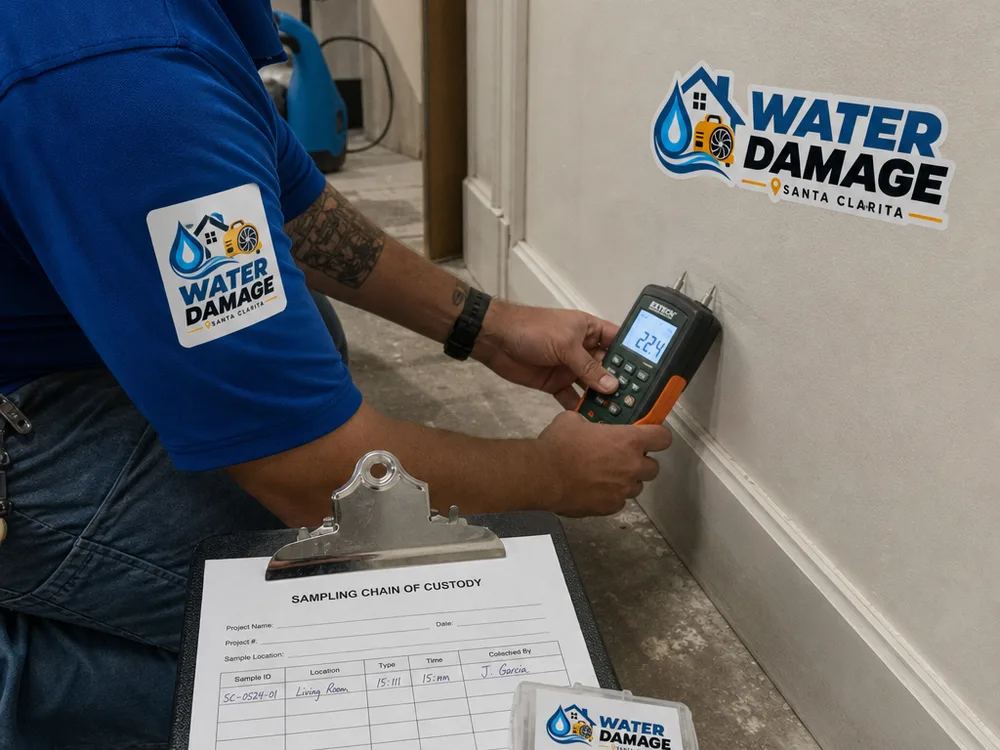
If porous materials were wet and you are not sure they fully dried, testing plus moisture mapping helps confirm whether hidden areas are still damp and likely to support growth.
A musty smell in a bedroom, hallway closet, or under-stair storage can come from a small hidden damp spot. Air and targeted surface sampling can narrow the search.
If a disclosure or visual signs suggest past moisture, an inspection with selective sampling can provide documentation for decision-making.
If growth is plainly visible on a small non-porous surface, correcting moisture and cleaning safely may be the priority. Testing remains useful when documentation is needed or the scope is unclear.
Settling plates and generic kit results do not identify the source or explain the severity. A field inspection with proper controls produces findings you can act on.
We confirm the property type, areas of concern, and any recent leaks, drying, or HVAC issues so the inspection plan fits what actually happened.
We inspect likely water pathways under baseboards, around windows, below bathrooms, and near air handlers, then take moisture readings to identify materials still at risk.
Depending on the findings, we may recommend indoor air samples with an outdoor control, surface samples, or targeted samples where moisture is confirmed.
Samples go to a qualified laboratory for analysis. Results are summarized in plain language with notes explaining what was tested, where, and why each location matters.
You receive a practical plan covering the moisture source, materials that may need removal, appropriate containment, and when post-work verification makes sense.
Planning the inspection
Mold testing in Santa Clarita typically ranges from about $300 to $850 for a residential visit, depending on how many areas are sampled and whether moisture mapping is straightforward or more investigative. A basic inspection with one to two samples is usually at the low end, while larger homes or multi-room concerns with multiple air and surface samples trend higher.
Your final price depends on the number and type of samples, how many rooms need evaluation, access to areas such as attics or tight closets, and whether an active leak changes the scope. Exact cost is confirmed after the on-site inspection plan is set.
Local conditions
Mold needs moisture. In Santa Clarita, that moisture often comes from specific, fixable building and lifestyle conditions rather than constant outdoor humidity.
We serve homeowners and property managers across the Santa Clarita area, including Valencia, Saugus, Canyon Country, and Newhall. Common concerns include shared plumbing walls, second-floor bathroom leaks into ceilings, and garage-adjacent rooms where temperature swings and stored items reduce airflow.
If the underlying source remains active, testing alone will not solve the problem. When materials are still wet, the faster path is often inspection, a drying strategy, and then targeted testing to confirm conditions are back to normal.
If you suspect mold after a leak or ongoing dampness, get a written inspection plan and sampling strategy first so the results are meaningful and the next step is clear.
📞 Santa Clarita • 24/7 ResponsePractical questions
Scheduling depends on current demand, but many inspections can be arranged quickly because the first step is a focused on-site evaluation and sampling plan. Mention recent leaks or visibly wet materials so the inspection can prioritize moisture mapping and time-sensitive areas.
Both are used, but the right choice depends on the concern. Air samples help when odors or uncertainty about spread are involved, while surface samples help identify a specific suspect spot. An indoor air sample with an outdoor control often provides useful context.
Testing can indicate a hidden source, but it does not automatically pinpoint the exact cavity without inspection and moisture data. Readings, staining patterns, and targeted sampling help narrow the source. Controlled access may then be recommended to confirm conditions safely.
It is not always required when the source and affected materials are obvious. It is useful when the scope is uncertain, documentation matters, or a musty odor is present without visible growth.
Turnaround depends on the laboratory and sample type, but results are commonly available within a few business days after collection. Ask about expected timing when scheduling if containment, repairs, or tenant coordination depend on the report.
Leave suspect areas as-is so the inspection reflects real conditions. Avoid heavy cleaning, bleach sprays, or moving wet materials between rooms. Share any recent fan or dehumidifier use and ensure access to under-sink cabinets, equipment closets, and rooms where staining or odor is strongest.
Make the next decision with evidence
Tell us what you are seeing and where you are smelling it. We will recommend the right inspection and sampling approach for your Santa Clarita property, then walk you through practical next steps once results are in.